i'm a software engineer based in the philippines, driven by curiosity and whatever i find interesting. i learn fast with the caveat of goldfish memory (which i call my context lol) and i'm usually self-motivated that i forget to eat.
this is not like other portfolios. feel free to have a look around and explore what makes me, me.
drag empty cork to move around. drag notes to rearrange them. use +/− or pinch-wheel to zoom. click any note to open it.
i turned weeks of neuroscience papers into her memory system.
W
weave
weave gives long-running agents memory, state tracking, and retrieval that can be inspected.
current benchtypescriptagentsmemory
giving an ai agent a hippocampus
i watched a kdrama about a girl who forgets everything every morning and realized my AI agent has the same condition. so i built it a brain.
wfd · 2026-02-28T02:01:00 · 14 min
what keeps me going
someone else is on the other end.
x.com
follow me on X
from avery v3github.com
Mem0
from giving an ai agent a hippocampusarxiv.org
AI Meets Brain: Memory Systems from Cognitive Neuroscience to Autonomous Agents
from giving an ai agent a hippocampus
i'm less interested in whether it's good.
how does it work?
my focus has improved and i'm not sure why.
ideally when something is coming up, whether it's work related or it's just a personal project of mine i usually let it run at the end because i need pressure to perform things.
maywritten · 2026-06-10 · 3 min
a handdrawn chart titled day in a life showing focus changing through the daymy focus has improved and i'm not sure why.my.clevelandclinic.org
lamotrigine
from my focus has improved and i'm not sure why.
noiseshape
diffusion models
watching a photo develop.
do you want me to do that?
i built an AI agent with persistent memory. now i need to figure out if it's remembering the truth or just what i wanted to hear.
wfd · 2026-03-02T09:42:00 · 4 min
the usage of ai in daily work
AI makes me faster. It also might be making me dumber. I'm figuring out where the line is.
wfd · 2026-02-28T02:01:00 · 3 min
nytimes.com
AIinduced psychosis
from do you want me to do that?⋈
“remember that no matter how hard life gets, there is always bucket of wet slop, grins”
— cassie
lto medical clinic directory
i got tired of finding LTO-accredited medical clinics through SEO slop and a government website that looks like it was built as a punishment. so i made a map.
wfd · 2026-02-18T01:55:00 · 6 min
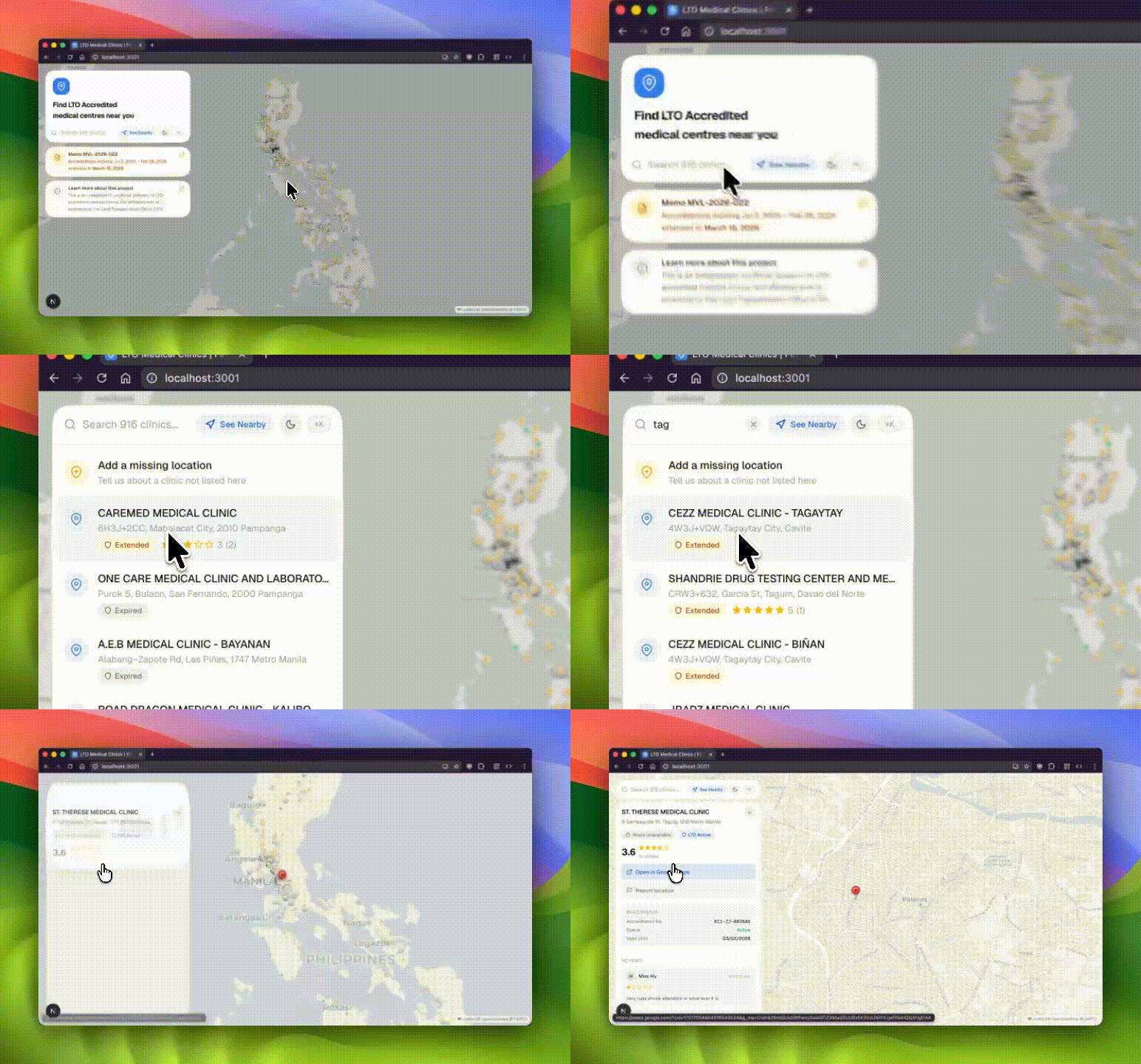
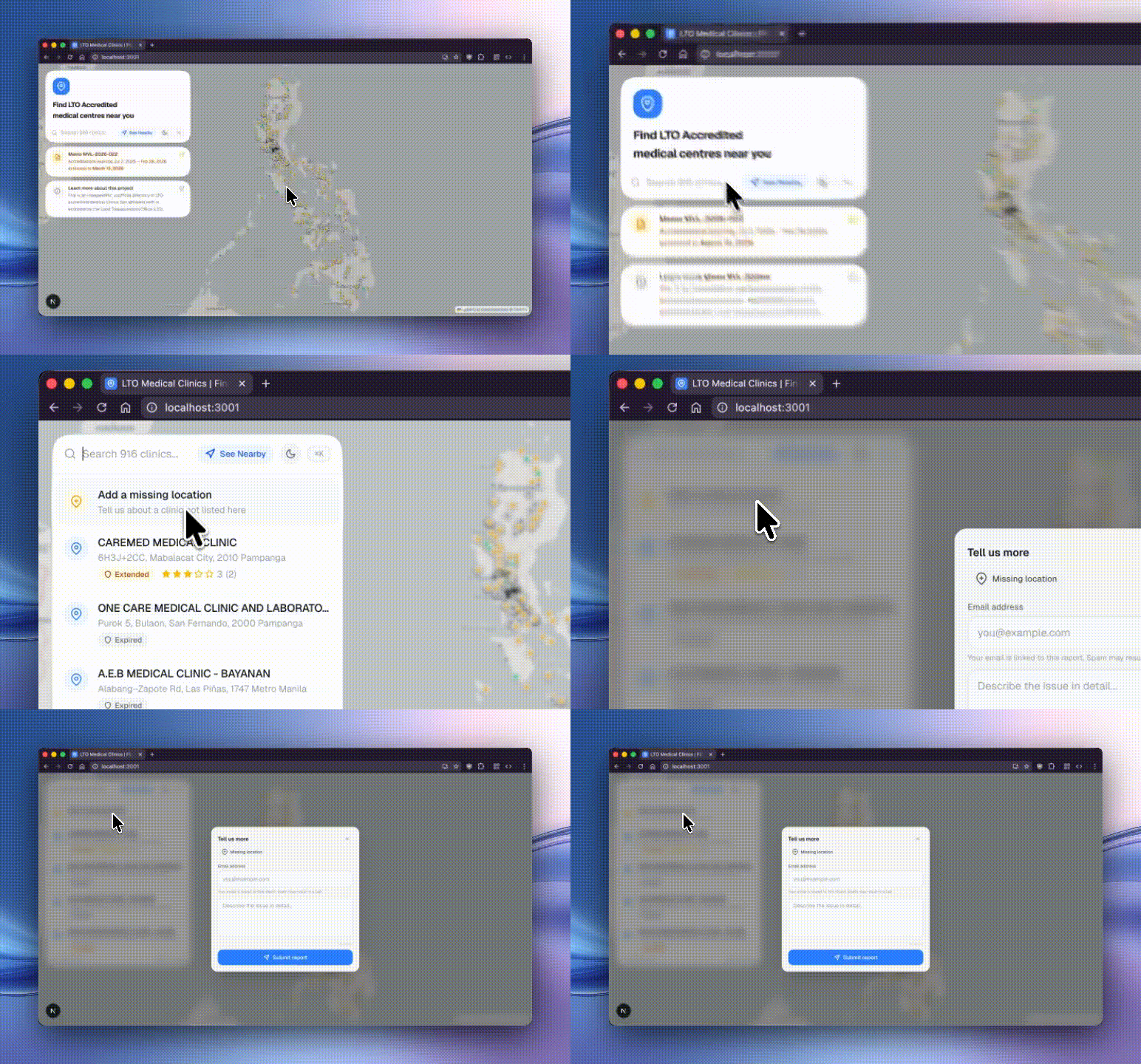
the app in actionlto medical clinic directorynearby clinics shown from a clinic's detail cardlto medical clinic directoryreporting a missing location from searchlto medical clinic directorylto.gov.ph
lto.gov.ph/medicalclinics/
from lto medical clinic directory
A
atlas
atlas maps symbols, calls, tests, and history so developers and agents can ask structural questions about a repository.
current benchtypescriptsqlitemcp
Atlas: structural code-intelligence for LLM agents (an empirical evaluation)
2,239-trial benchmark across 8 OSS repos: Atlas beats a text-search baseline by +0.223 deterministic, +0.127 LLM-judge, at 42% fewer tokens.
wfd · 2026-04-19T18:00:00 · 17 min
O
orchestrator
orchestrator lets a local model read and control a live chromium page through the devtools protocol.
Looking for the app?
this is the about page for the LTO medical clinic directory. take me back to the map.
this project is not affiliated with the Land Transportation Office or any government agency. it is an independent, community-driven tool built out of pure spite toward the existing options for finding accredited clinics.
if you need an LTO medical certificate in the Philippines, you need to visit an LTO-accredited medical clinic. finding one should be simple. it is not.
the official LTO website has a list. it's literally just a table: clinic name, accreditation number, expiry date. there are no addresses, no map, and no way to search. you can't tell if the clinic near you is still operating or expired three months ago. the data exists but it's presented like a spreadsheet someone forgot to close.
google maps isn't much better. search "LTO medical clinic near me" and you'll get a mix of accredited clinics, expired clinics, driving schools, and whatever else Google's algorithm decided was relevant. there's no way to filter by accreditation status or verify anything against the official list.
then there's the SEO slop. searching for "LTO accredited medical clinics" surfaces dozens of content farm pages that scrape the same outdated list into a blog post, surround it with ads, and call it a resource. half of them have clinics that closed years ago. some don't even have addresses.
a map-based directory of LTO-accredited medical clinics in the Philippines. search by name or location, see what's nearby, check opening hours, get directions. that's it.
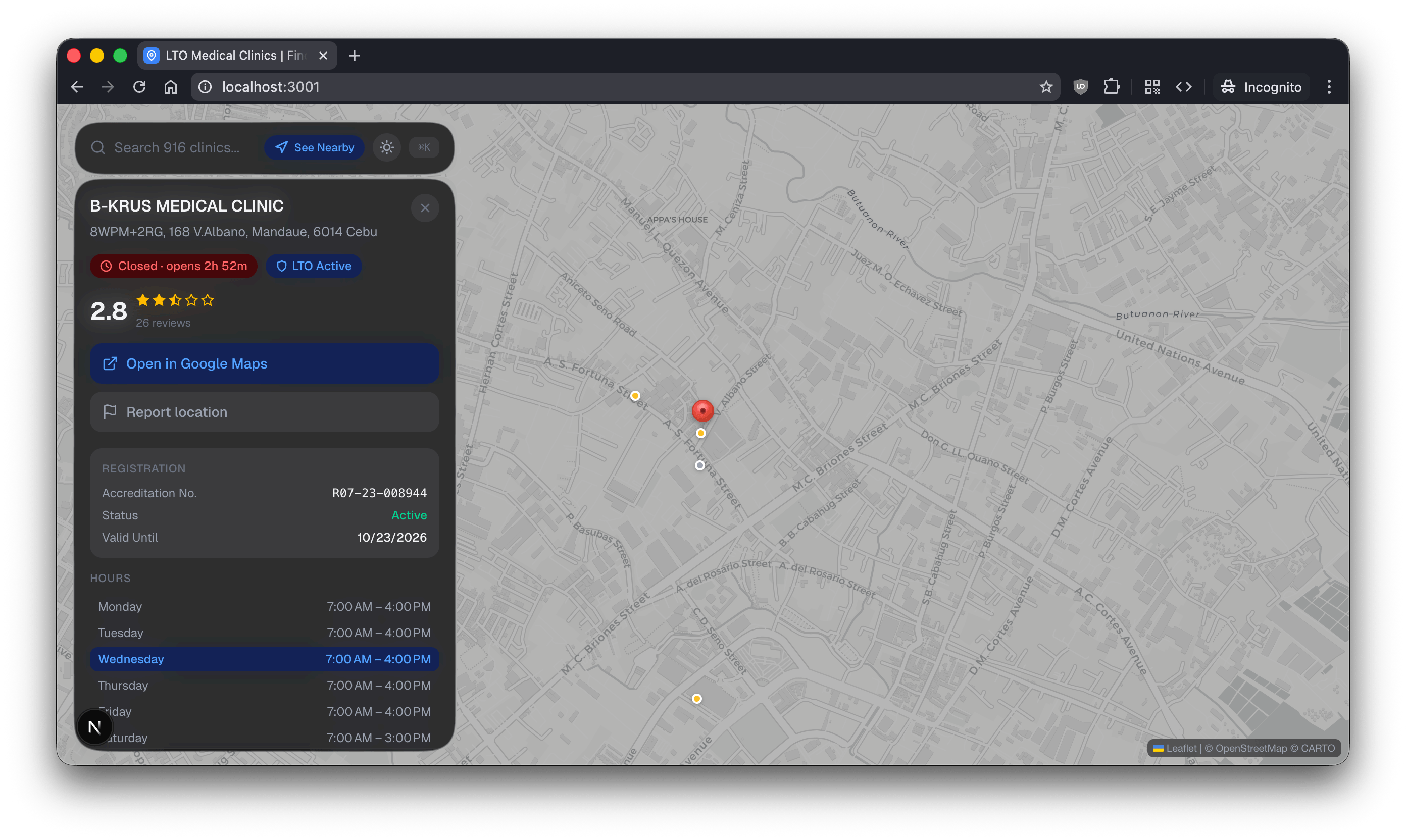
the interface is inspired by apple maps. clean, minimal, dark mode support. it runs on Next.js with Leaflet for the map layer and OpenStreetMap tiles. the clinic data is sourced from the official LTO list and cross-referenced with LTO memorandums for accreditation status.
nearby clinics and location access
the app can show clinics near you, but only if you let it. tapping "see nearby" triggers a browser location permission prompt. if you grant it, your coordinates are used to sort clinics by distance using the haversine formula and the closest ones appear at the top of the list.
your location never leaves your browser. the distance calculation runs entirely client-side. there's no server call, no analytics ping, nothing stored. the coordinates exist in memory for the duration of your session and that's it.
if you deny the permission or your browser doesn't support geolocation, the app works the same way it always does. you just search by name or browse the map manually. if you've previously granted location access, the app will use the cached permission on future visits without asking again.
reviews, hours, and clinic details
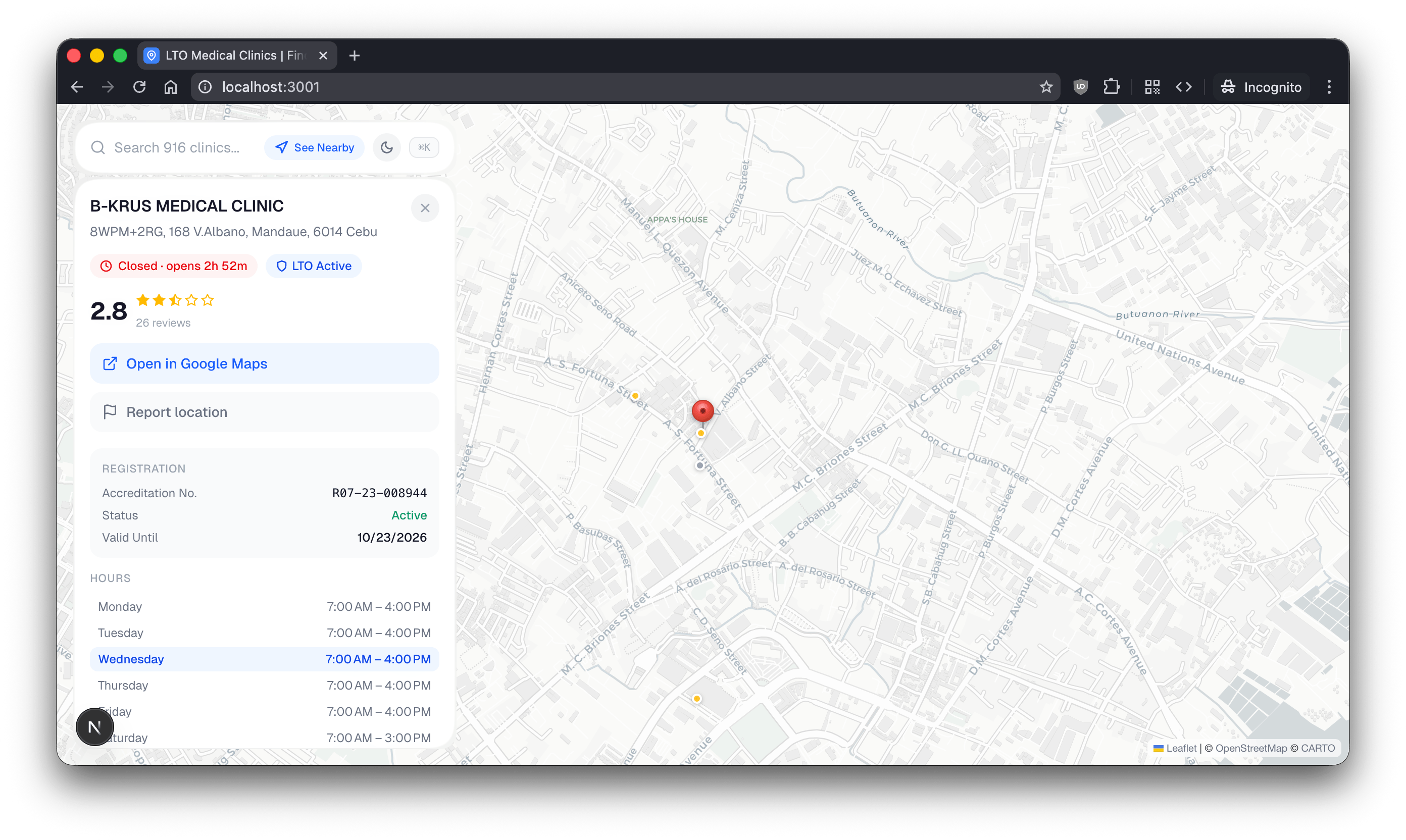
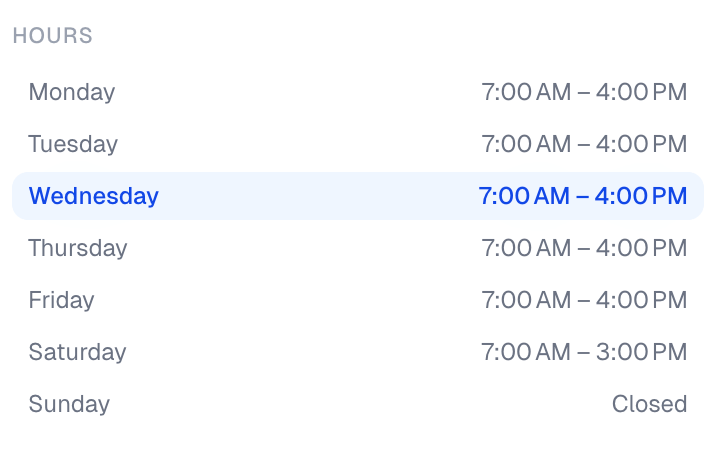
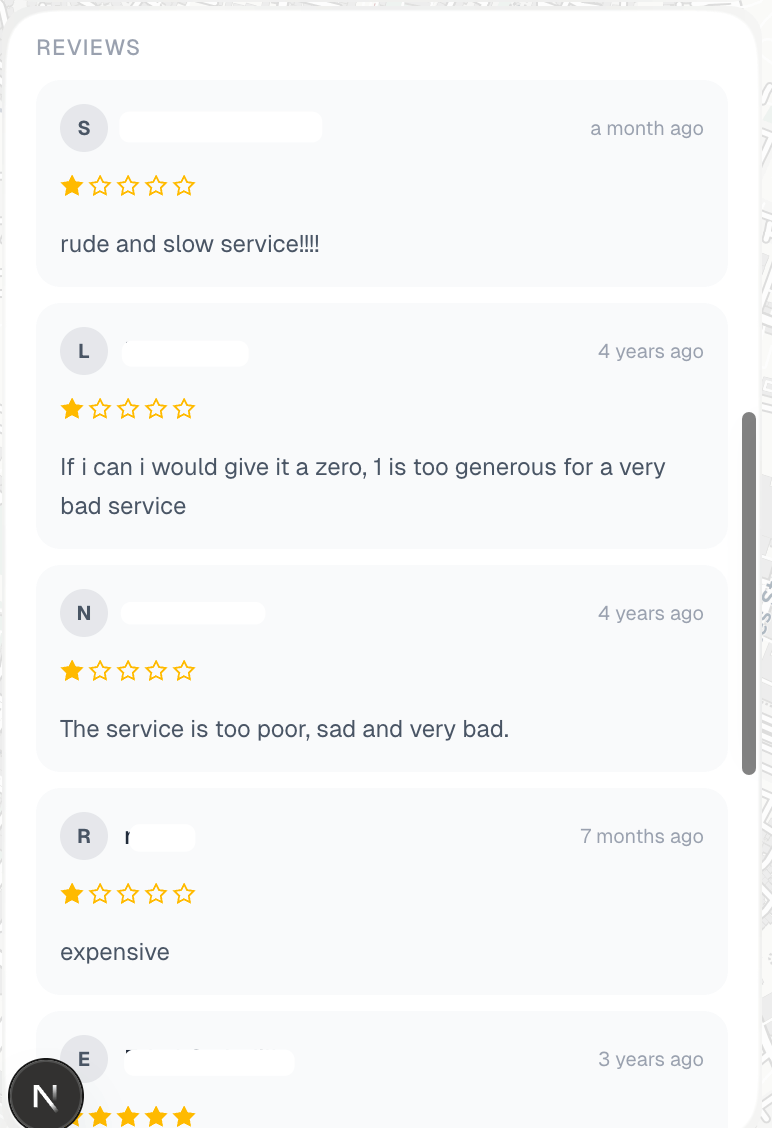
each clinic card shows what's publicly available: opening hours, Google reviews, and accreditation status. this data comes from public sources and varies per clinic. some have full schedules and dozens of reviews, others have nothing beyond a name and accreditation number.
all three are subject to what's actually out there. if a clinic hasn't been reviewed or hasn't published its hours, there's nothing to show. the app doesn't fabricate data to fill gaps.
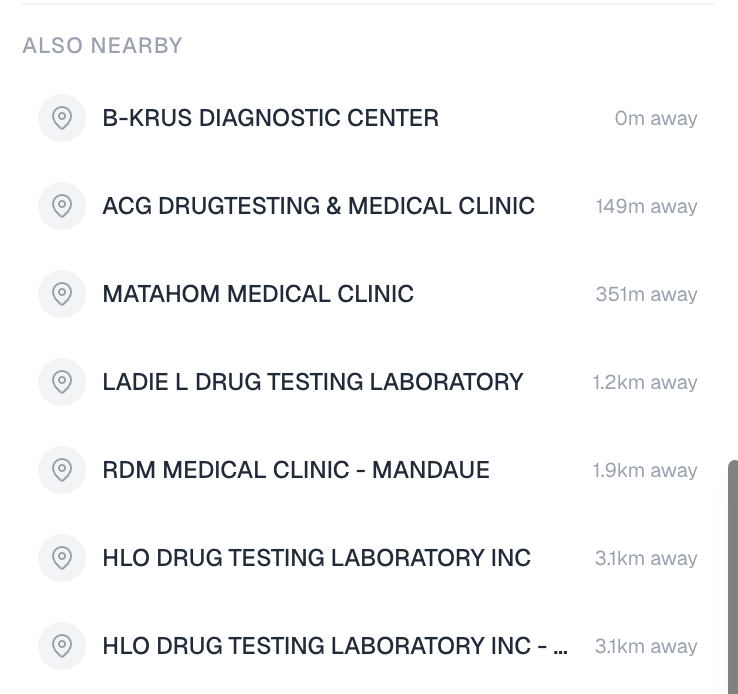
not your clinic? here's others nearby
when you open a clinic's detail card, the app shows other accredited clinics in the area. if the one you're looking at is too far, has bad reviews, or just isn't what you need, you can see alternatives without going back to search.
the nearby list is sorted by distance from the clinic you're viewing, not from your location. it answers "what else is around here" rather than "what's closest to me."
how the data works
the clinic list is compiled from lto.gov.ph/medical-clinics/ and verified against official LTO memorandums. each clinic entry includes the name, address, accreditation number, and opening hours where available.
this is a community-driven directory. the data is verified against official sources on a best-effort basis, but clinics open, close, and change details regularly. if something looks wrong, report it.
the reporting system is baked into the app. reports are not public by default. your email is linked to your submissions for accountability and follow-up, but isn't visible to other users.
reporting a location
there are two entry points for reports:
from search results: the first item in the search list is always "add a missing location." tap it, fill in the details, and submit. this creates a GitHub issue tagged as a missing location report.
from a clinic's detail card: every clinic has a "report location" button. tapping it gives you three options:
report type
when to use
this location has missing information
hours, address, or other details are incomplete
this location has incorrect information
something listed is wrong
this location does not exist
the clinic has closed or was never real
after selecting a type, you'll be asked for your email (for follow-up if needed) and a text field to explain the issue. submitting creates a GitHub issue with the clinic's name, accreditation number, report type, and your details.
there are anti-spam measures in place. your email is linked to every report you submit. abuse the system and you will be rate limited or banned.
sources and trustworthiness
the directory is only as good as its data. the baseline comes from the LTO's own published list and memorandums. beyond that, it depends on community reports.
i can't guarantee every clinic is still open or that every detail is current. what i can guarantee is that every report is tracked, and the data is updated as reports come in.
if you find something wrong, report it. that's the whole mechanism.
tracking
there is none. the app doesn't use analytics, telemetry, or any third-party tracking scripts. if you run into an issue or have feedback, email me directly at hey@ryanaque.com and i'll get back to you.
is it open source
probably not. the data pipeline relies on scraping government websites, and open-sourcing the scraping logic would make it trivial for the source to block it. publishing how you bypass rate limits and parse specific page structures is essentially handing the target a checklist of what to patch. the data staying accurate matters more to me than the code being public.
yes. the layout adapts between desktop and mobile. on mobile, the search panel sits at the bottom as a sheet and nearby clinics stack vertically. on desktop, it's a sidebar with a wider map view.
both use dvh units because safari's address bar likes to lie about viewport height.